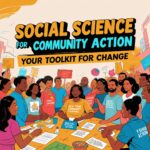

Hey, aspiring researcher! Let’s break down how to use systematic methods to study communities like a pro. Think of it as solving a puzzle—each step gets you closer to the big picture! 🧩🔍
Step 1: Icebreaker – Your Research Question
💬 Quick Think:
What’s one thing you want to understand about your community?
(Example: “Why do some students drop out of school?” or “How can we reduce plastic waste here?”)
🌟 Key: A good research question is clear, focused, and actionable .
Step 2: Choose Your Methodology
💡 What’s Your Approach?
Pick a method based on your question:
- Quantitative Research :
- For numbers and patterns .
- Example : Survey 100 households to measure recycling habits.
- Qualitative Research :
- For stories and meanings .
- Example : Interview 10 elders about cultural traditions.
- Mixed Methods :
- Combine both for a fuller picture.
- Example : Survey + focus groups to study youth unemployment.
🎮 Activity:
Match your research question to the best method!
Step 3: Design Your Data Collection Tools
1. Surveys
- How : Create structured questionnaires (online or paper).
- Tip : Use Likert scales (e.g., “Strongly Agree” to “Strongly Disagree”).
2. Interviews
- How : Ask open-ended questions (e.g., “What challenges do you face?”).
- Tip : Record responses (with permission!).
3. Focus Groups
- How : Gather 6-8 people to discuss a topic.
- Tip : Use a facilitator to keep the conversation on track.
4. Observations
- How : Watch and document behaviors (e.g., how people use a park).
- Tip : Take notes on a checklist or app like Evernote .
Step 4: Sampling – Who Will You Study?
📊 Two Options:
- Probability Sampling :
- Randomly select participants (e.g., every 5th house in a barangay).
- Best for : Generalizing results to the whole community.
- Non-Probability Sampling :
- Choose specific groups (e.g., single mothers, street vendors).
- Best for : Deep insights into marginalized voices.
🌍 Example:
To study child malnutrition, you might sample low-income households and interview healthcare workers.
Step 5: Analyze Your Data
1. Quantitative Analysis
- Tools : Excel, Google Sheets, or SPSS.
- Example : Calculate the % of families using mosquito nets.
2. Qualitative Analysis
- Tools : Code responses into themes (e.g., “fear of stigma” or “lack of transport”).
- Example : Group interview quotes about why teens skip school.
3. Triangulation
- How : Compare data from surveys, interviews, and observations.
- Why : Ensures your findings are reliable!
Step 6: Share Your Findings
📚 Make It Accessible:
- Visuals : Charts, infographics, or maps.
- Language : Avoid jargon—use stories and examples.
- Formats : Reports, podcasts, or community presentations.
🌍 Example:
A study on waste management in Manila’s slums led to a comic book explaining recycling rules.
Step 7: Ethics First!
⚠️ Must-Dos:
- Informed Consent : Explain the study and let people opt out.
- Confidentiality : Anonymize data (e.g., “Participant #3”).
- No Harm : Avoid questions that shame or endanger participants.
💡 Pro Tip:
Run your plan by a local leader or ethics board for feedback.
Step 8: Case Study – Reducing Plastic Waste in Bali
🌍 How They Did It:
- Survey : 500 tourists and locals on plastic use.
- Interviews : Shop owners shared barriers to going plastic-free.
- Action : Used findings to push for a ban on single-use plastics.
❓ Reflect:
How would you research a similar issue in your community?
Step 9: Your Research Project
🚀 Take Action:
- Today : Write your research question.
- This Week : Design a survey or interview guide.
- This Month : Pilot your tools with 5 people and refine them.
💬 Final Thought:
“Research is formalized curiosity. It’s poking and prying with a purpose.” – Zora Neale Hurston